RESOURCES
Building Guide
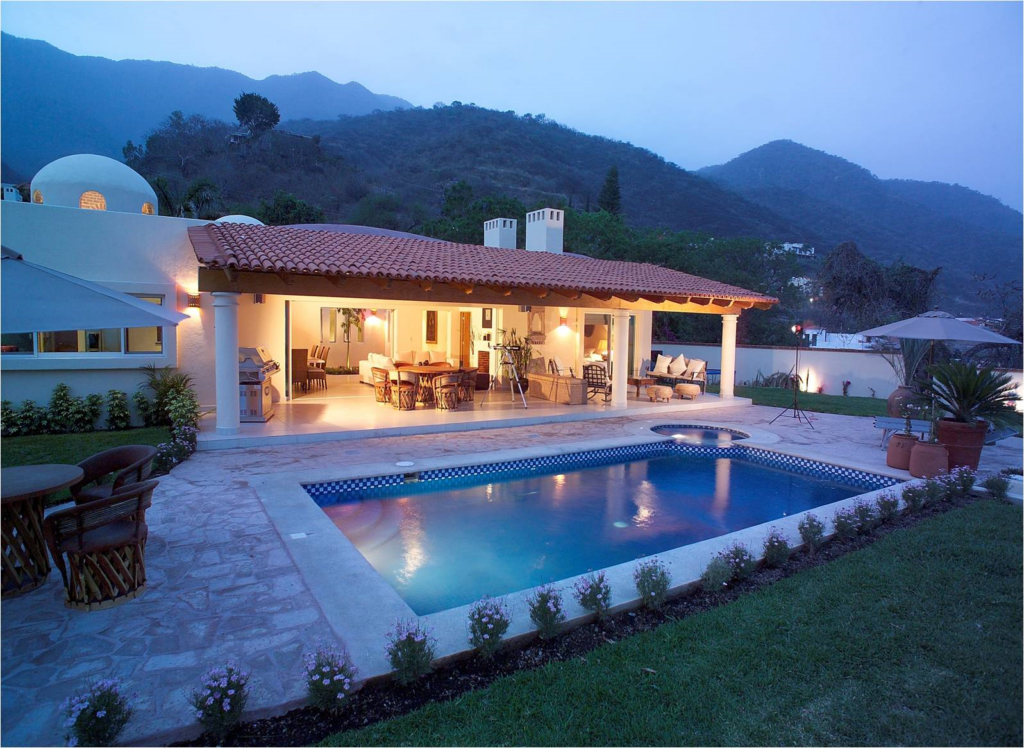
Are you considering building your dream home in the retirement haven of Lake Chapala?
Building a home in Lake Chapala is still a great deal IF you can maintain proper management and control of the project. Prices for the U.S. home builder have gone up in the past 5-6 years due to inflation and a slight drop in the value of the U.S. greenback compared to the Mexican Peso but, costs per square foot are still reasonable compared to the states or Canada.
Construction costs in 2016-2018 were quoted as $35-40 USD per square foot for low end $45-50 for mid range construction, $60-80 for high end. These prices have escalated to $70-80 for low end, $90-110 for mid range, and $115-140 for high end construction. Keep in mind that this is just for the construction of the house on a level lot. Work to the lot, retaining walls, steep slopes, perimeter walls, garage doors on perimeter walls, pools, landscaping, sidewalks, security, solar panels, etc are all extra.
There is, however, lots to learn about building in Mexico and building with concrete and brick. Almost everything is different from the way we are used to back in the U.S. or Canada where most homes are built from wood. Here, things are still very much hands on with very little mechanization or mass produced material. The end result is a home truly custom built and built by hand. From the iron ‘rayas’ (ornate bars on windows and doors) specially crafted just for you in a local welders shop ‘herreria’ , to the specially crafted brick vaulted ceilings ‘bovedas’ and ‘cupulas’ (tall domes with or without windows for ventilation).
Another thing that you will find different in Mexico compared to north of the border is the need for water storage. There are two types of water storage. First (and most common) is the ‘aljibe’ (cistern) made with concrete or (often nowadays) plastic tanks. The second is the ‘tinaco’ (a plastic tank placed on the roof of the house). Sometimes both are used in conjunction with each other. The water is released by the municipality or pumped from a well 2-7 times per week into the aljibe. It is then pumped up to the tinaco for water storage and gravity fed into the house. This serves a twofold purpose of providing water even during power outages and heats the water via solar energy. The other method when not using the tinaco is to pump the water from the aljibe and feed it through a pressure tank and then through a gas fired ‘on demand’ heater, or gas fired hot water reservoir tank.
Building can be challenging at the best of times but building in a different country and different language requires the help of a good local architect and builder. He will be instrumental in helping to bring your conceptualization of the home to agree with something that can be built in Mexico and with the materials and ways of construction common in Lake Chapala.
Another challenge, if you are from the U.S., is the fact that you’ll need to get used to the metric system or otherwise disastrous mistakes can happen. Again, a great architect will help you along the way but it is good to start thinking in metric.
To help you get started with your building journey in another language, here are some more common building items to help you when you’re on the job site:
Azulejo
Varilla
Alambre recocido
Cal
Piedra
Arena río
Grava
Jal
Viga
Talavera
Teja
Impermiablizantes
Saltio
The Pros and Cons of building.
The Lake Chapala area has become an increasingly popular retirement destination in the last several years. With a continuing shortage of resale homes, many expats are considering the option of purchasing land and building. For some, this is a great idea. For others, it can become a living nightmare.
So what are the pros and cons to building in a foreign country? Is it really worth the risk and bother? And how is it different from building “up north”?
Pros:
Can be a good investment: Building a house Lakeside can be a good investment IF you are good at watching your expenses. Demand is very strong right now from the growing retirement bubble of ‘baby boomers’ so if you have been searching unsuccessfully for the right home, or haven’t managed to be first in line to buy the home you wanted, now might be the time to take the plunge and build.
Customization: Getting the exact floor plan and quality construction that you want is probably the strongest argument for building a house. You can hire an architect to design your perfect home, then take “hands on control” and find a capable builder to construct your dream place to live. Your new home will have all the features that you want and need for your perfect lifestyle.
You have a brand new home!! : Just like a brand new car, you are the first to set foot in your new place. You set it up, decorate it, make it your own!
Modernization: Building new means that you can choose the latest in building materials, designs, techniques, plumbing, lighting, electrical systems, and more. You can include enough of everything for your needs, such as electrical breakers and plugs, water pumps and filtration.
No Repairs! Yay!: If everything was done right the first time, you should live repair-free for many years to come.
Is it Covered? : Many local builders will offer a 6 months to 1 year warranty against structural defects. Make sure to discuss warranty provisions when you hire your contractor and to have it all in writing.
Cons:
Supervision on site is required: Unlike up north where you can hire a good contractor and just walk away and return when it’s time to move in, here in Mexico is a absolute necessity to oversee the construction on a daily basis. Murphy’s Law rules apply here: “If there is anything that can go wrong it will go wrong”. Take hands on control and visit the construction site daily to ensure progress is made according to plans.
Language barrier: Depending on the contractor you hire, Spanish might be a necessity. Not all contractors are fluent in English and the ones who are generally charge more. There are lots of new words to learn as well as building concepts that are very different than wood frame homes in the north. When visiting the construction site and your English speaking contractor is not there, you will need to deal with workers who do not speak English and sign language will only take you so far.
Metric dilemma: I mention this for both U.S. citizens and Canadians who are not fully metricized. From the time you buy the lot through the time you design and build, you will be informed of everything in the metric system, not the imperial system of measurement. If you are not fully fluent with the metric system it could lead to problems.
Manana factor: Many contractors and workers are committed to their job and to showing up for work on time (except, perhaps, when they had a Fiesta (celebration) the night before. Delivery of supplies, however, including the correct materials and equipment, is out of your workers’ control. This can delay and complicate construction endlessly, and drive the homeowner crazy. Relax. No one ever said this would be easy.
Have you hired well?? : Like most places in the world, there are great contractors and not so good ones. Do your homework before you hire! Get references from as many happy customers as possible, preview examples of their work, and ask questions. If you have found a good, honest contractor, he will have a good crew and the whole process will get easier from there.
IMSS: This stands for Instituto Mexicano del Seguro Social (medical care system) and it is required that the contractor pay to the government the required amount for each of their workers. “So what”, you say? “How does this affect me?” Well, there have been some horror stories in the past about contractors not paying this and the workers or government coming back to the home owner trying to collect. Be careful. Ask the contractor for receipts of IMSS payments to confirm the bills are paid.
Are we there yet? : Building in Mexico can take anywhere from 8 months to 2 or even 3 years! This is a lot slower than throwing up a wood frame house north of the border, but it is well worth time it takes to construct a quality home.
Are you prepared to rent? : While your home is being constructed you need some place to live. This will mean finding accommodations for up to 2 years. With soaring rental rates Lakeside, this can add significantly to your budget.
Mind your pesos! : Just like anywhere in the world, it’s smart to set up a budget for building new construction. Feeling weak in front of a beautiful floor tile at Home Depot and constantly changing your mind about what and how you want things done, can quickly drive up the cost of your project. Don’t forget other things like landscaping, perimeter walls and security, hook up costs for plumbing, electricity, telephone, and building permits all have to be accounted for at the end.
You got nothing until you’re finished – The biggest con is no matter how much money you pour into the project, you can’t live there until it is finished (unless you had a casita built). This can be devastating and projects can drag on for various reasons sucking your money and patience.
Ejido Land: Although this item should have been check marked off when you purchased the lot, this is a reminder to be careful about buying native Indian land in Mexico. Do not fall into the trap of buying a large piece of land for an outstanding price, and possibly paying someone who claims to be the owner a large sum in advance. Work with a Realtor who knows the area that you want to live in. Make sure there is a Deed (proof of ownership for resale) for the parcel of land that you are interested in, that can be checked by a Notario to ensure accuracy and rights to sell the land to you.
So ask yourself, “Is building right for you?” Are you made of the right stuff to go through the experience and are you willing to spend up to 2 years of your life building your perfect home? Only you can answer that. Building in Mexico is a viable option but not for the faint of heart.